The Nature Walk Is Not a Spotting Contest
A nature walk need not become a species tally. Learn to follow one sound, shape or change and leave with a clearer sense of the place around you.
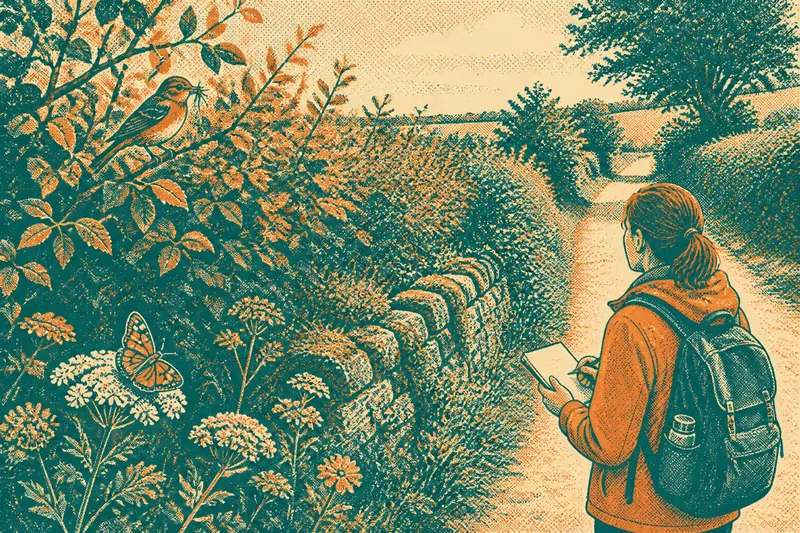
A nature walk can be rewarding without identifying a single species. Instead of treating every bird, plant or insect as a puzzle to solve, notice how living things use the place around you: where a bird pauses, how a plant meets a wall, or what gathers beneath a hedge.
Notice relationships between wildlife and its surroundings
Begin with a relationship rather than a target. Look for the connections that are visible from the path: a flower visited by an insect, a bird moving between branches, or moss growing where stone stays damp. These details show how a habitat works without requiring a species name.
A habitat is the place an organism uses for food, shelter or other needs. You do not need to know every part of that relationship to notice it. A bird repeatedly returning to a thicket, for instance, gives you a clear observation about its movement, even if you cannot identify the bird.
Keep a little distance. Use binoculars if you already have them and can do so without blocking the route, but do not approach a nest, den or feeding animal for a better view.
Compare nearby patches without disturbing them
Places only a short distance apart can have different conditions. A sunny verge may hold flowering plants, while the shaded side of a hedge stays cool and damp. Compare what is already visible from a safe, permitted path rather than stepping into vegetation or turning over stones.
Notice a few broad features:
- Whether the ground is sunny, shaded or partly covered.
- Whether plants grow close together or leave bare patches.
- Whether a hedge, tree line, wall or stream provides shelter or a boundary.
- Whether the visible ground looks dry, damp or waterlogged.
- Whether animals appear to be passing through, feeding or resting.
- Whether people, dogs, traffic or other activity may be affecting what you can see.
Each observation can guide your next choice. If a patch is crowded or fragile, stay on the path and look from farther away; if the view is obscured, move to a permitted viewing point rather than pushing through plants.
Describe what you see before guessing what it means
Separate direct observations from interpretations. “A small bird carried a twig into the hedge” records something visible. “It was building a nest” is a possible explanation, but the twig might have been carried for another reason. Keeping that distinction makes your notes useful without pretending to know more than you do.
Say you are on a public path beside a mixed hedge. You see a small bird fly from the grass to a branch with a short piece of plant material in its beak. You pause at the path edge, watch it disappear into the foliage, and write down the movement without following it. Your note is “small bird carried plant material into hedge”; the result is a clear record, while the bird's identity and purpose remain open questions.
If you use a field guide or identification app, compare its suggestion with visible features and treat the result as provisional. An app may help you decide what to look for next, but it cannot turn an uncertain view into a certain identification.
What should you do when an observation is uncertain?
How can I tell what a bird is doing?
Record the action you can see, such as feeding, flying between branches or calling from cover. Avoid assigning a purpose, such as nesting, unless the evidence is clear and you can observe without approaching.
Should I photograph wildlife?
A photograph can help you review visible details later, but take it from the path without using flash or moving closer. If taking a picture would disturb an animal or obstruct another person, leave the camera away.
What if I cannot identify a plant or animal?
Write or remember a plain description, such as “yellow flowers beside the wall” or “small bird with a pale chest”. You can consult a reliable field guide later, or leave the name unknown.
How can children observe nature responsibly?
Ask them to describe what an animal or plant is doing before guessing its name. Agree to watch from the path and leave plants, nests and small creatures where they are.
Let access and wildlife set the limits
Follow local signs and stay on marked routes where they are provided. Do not enter restricted areas, pick plants or disturb habitats to improve a view. If an animal moves away, let it go without pursuit.
Shared paths need attention too. Move aside only where it is safe, and keep aware of cyclists, horses and other walkers. On a narrow route, it may be better to keep moving than to stop for a closer look.
Weather and human activity affect what appears in a place. Rain may bring worms to a path, while traffic can make a small bird hard to hear. Treat these conditions as part of the setting, not as a reason to force a better encounter.
Leave with one observation you can describe
Before leaving, recall one relationship you noticed: a bird using a hedge, insects visiting flowers, or plants growing in shade. A brief, factual description is enough; it need not become a list or a claim about the whole habitat.
If you keep notes, include where you were and what you directly observed, while avoiding sensitive details about nests or rare wildlife. The nature walk becomes a spotting contest only if naming everything is the goal. Paying attention to how organisms share a place offers a more grounded way to remember it.