Paddle or Stay Ashore? Two Ways to Spend a Quiet Hour by Water
Paddle or stay ashore: compare a kayak’s changing shoreline view with a bank-side pause, then choose an accessible, suitable way to enjoy time by water.
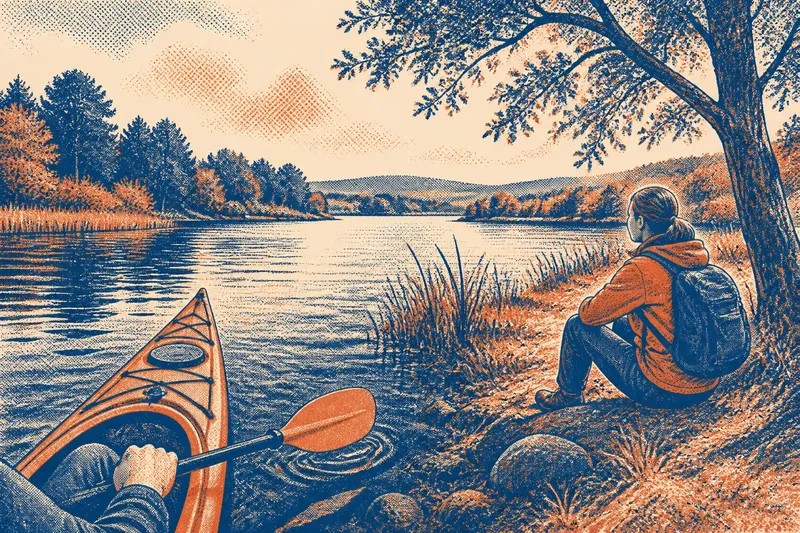
Paddle or stay ashore: the choice changes what a quiet hour by water can show you. A kayak reveals the shoreline from moving viewpoints, while a path or landing lets you look closely at how the bank meets the water.
A kayak reveals the shape of a shoreline
From a kayak, the bank shifts as you move. Reeds overlap, a bend hides what lies beyond it, and a small change in direction brings another part of the shore into view. This perspective can make a cove’s outline easier to follow than it is from one fixed place.
Distance can be deceptive on water. A tree that looks close from the bank may stand across a broad reach, and a gap between reeds may not lead through. Stay on a route you can judge and manage. An inviting opening is not proof that it is safe or accessible.
A paddle stroke also changes your view and the sounds around you. In a sheltered stretch, you may hear the paddle enter the water, then notice how wind crosses the surface or leaves move along the bank. A busy launch or passing craft can make a quieter place harder to find, so account for other water users as well as your own plans.
Look at how the waterway is arranged. Floating leaves may collect where the current slows; a sheltered inlet may have a smoother surface than an exposed reach. Treat these as features to observe, not reasons to approach wildlife or leave a safe route.
Wind, current, visibility and boat traffic affect how much attention paddling requires. If they make the water difficult to read, a short outing may feel more demanding than restful. Use a suitable craft and personal flotation device, follow local safety requirements, and check access with the land manager or relevant local authority when it is unclear.
The bank makes close observation easier
A landing, firm path or dry patch beside the water gives you time to look without steering a craft. A leaf caught against a root, a ripple from a falling twig or a wet line on the bank can show how water has moved through the place.
From shore, you can see where reeds thin, grass gives way to bare soil, or a gap opens a view to the opposite bank. Keep to durable ground where possible. Wet margins can be fragile, and a shortcut through them may damage plants or disturb animals.
A fixed viewpoint also makes it easier to pause, turn back or leave. That can suit a stretch with several short viewpoints, a busy launch or a path that becomes slick near the water. Check that the ground is stable before stopping, and leave launching and landing areas clear for boaters.
If you bring a notebook, give it a simple purpose: record one change you might otherwise forget. You could note the direction the wind pushes leaves, the colour of a shallow margin or where a stream joins a pond. A brief observation is enough.
Let access and conditions settle the choice
A sheltered lake may suit a gentle paddle if the launch is permitted and the conditions fit your experience and equipment. A narrow stream with overhanging branches may be easier to appreciate from a path, where you can see its bends without steering through them. Neither setting has one correct way to visit.
Check access before setting out. Some banks are private or protected, and some waters have designated launch points or restrictions on craft. A public path does not automatically give permission to launch. Follow local signs and access information rather than assuming a visible gap is an entrance.
Weather can change which option is manageable. A breeze may feel pleasant on a sheltered path but push a small craft towards an exposed bank. After rain, a waterside path may be slippery; strong wind can make open water uncomfortable. If either option feels difficult to manage, choose a safer viewpoint or postpone the outing.
Imagine you arrive at a reservoir with a marked launch and a path along one side. The wind is strengthening across open water, but the path is firm and reaches a sheltered corner with reeds. You decide not to launch, walk to the corner and watch the wind disturb the open surface while the sheltered edge stays calmer. The result is a clear comparison of the two parts of the reservoir without having to control a craft in changing conditions.
On a different day, if the water is calm, the launch is permitted and the bank is busy, you might choose a short paddle along the authorised shoreline instead. You would see the reeds from a new angle, while accepting that the bank’s small details are harder to inspect from the water.
Choose a focus that belongs to the water
Rather than collecting sightings, follow a feature that helps explain the place. Look at how a current bends around a point, where wind breaks against a sheltered inlet, or how a narrow channel opens into a wider reach. These patterns are specific to the waterway and offer a different focus from watching wildlife or pausing for general sensory details.
From a kayak, pause only where it is safe and suitable, keeping clear of channels, landings and other water users. From shore, stop somewhere that does not obstruct a path or access point. In either place, let the route and conditions take priority over staying for one more view.
- Check the route. If the return route is clear and manageable, continue within it; if it is uncertain, stay ashore or turn back.
- Check the surface and wind. If conditions suit your craft and ability, consider paddling; if wind or current makes control doubtful, choose the bank or another time.
- Check the ground. If the shore is firm, stop there; if it is muddy or fragile, remain on the established path and do not step into the margin.
- Check access signs. If launching and landing are permitted at the intended place, use the designated point; if permission is unclear or restricted, do not launch.
- Check for boat traffic. If a landing is clear, use it without delay; if people are launching or landing, keep the area open and wait elsewhere.
- Check your equipment and comfort. If your craft, flotation device and experience suit the conditions, paddle within your ability; if any part is uncertain, stay ashore or postpone.
These checks often settle the choice before you begin. A kayak can show how a shoreline curves; the bank can show how the ground meets it. Each viewpoint leaves something out, so choose the one that fits the conditions and the detail you want to follow.
What should you consider before choosing a viewpoint?
What is easier to see from a kayak?
A kayak can show how the shoreline changes around a cove or bend as you move along it. Choose this view only when access, conditions, equipment and your experience make the route manageable.
What is easier to see from the bank?
From shore, you can stay still and inspect the edge, including plants, water marks and changes in the ground. A path or landing also makes it easier to pause or turn back without managing a craft.
Is calm-looking water enough reason to paddle?
No. Wind, current, visibility, other water users and your own experience matter too. If those conditions are unclear or beyond your comfort, stay ashore or choose another time.
What if there are no wildlife sightings?
A changing current, the outline of a bank or the way wind crosses an inlet can give your outing a clear focus. Wildlife may remain hidden, and there is no need to approach animals to make the visit worthwhile.
Make the return part of the plan
Before leaving, check that your return route still makes sense. From shore, look for changes in the path or water level that affect your way back. Afloat, stay alert to conditions and return while you can still manage the route; do not extend the outing simply because the view is pleasant.
Take rubbish with you, secure equipment so it cannot reach the water, and use established paths and launch points. Give arriving and departing paddlers room, especially at a busy landing.
For a paddle or stay ashore decision, the useful question is what the place makes manageable today. The main search phrase, paddle or stay ashore, comes down to access, conditions and the view you want: a moving shoreline from the water, or the close structure of the bank. Check those factors before setting off, then let the place settle the choice.