How to Make a Camping Evening Meal Feel Welcoming
Plan a camping evening meal that brings people together without pressure, with clear invitations, considerate seating and room for different appetites and energy.
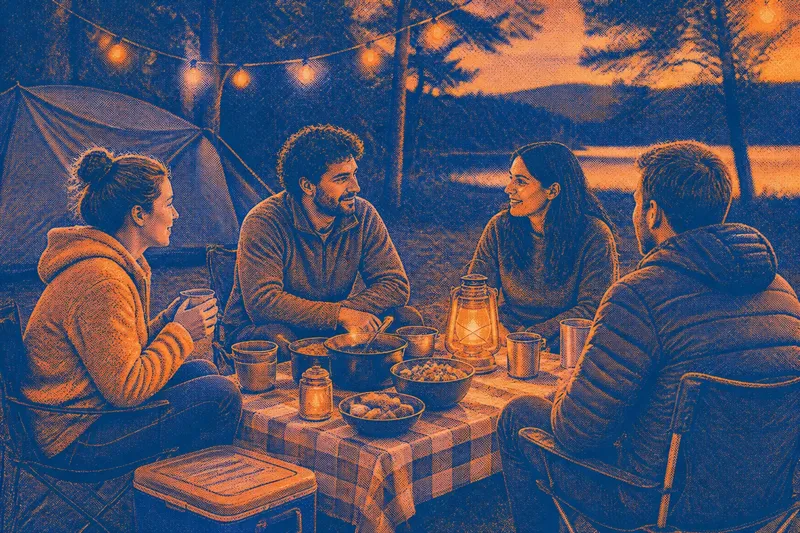
A camping evening meal feels welcoming when people know where to gather, what is expected of them and how they can take part. The food can be simple: a clear invitation and a comfortable place to sit do more to bring a group together than an elaborate menu.
That practical detail matters when companions have different appetites, energy or familiarity with one another. A shared meal can be lively, quiet or brief, provided nobody has to perform sociability or wait without knowing the plan.
Make the invitation clear before people arrive
Tell the group where the meal will happen and whether guests should bring food, help with a task or simply turn up. Clear expectations prevent a newcomer from wondering whether they have missed an arrangement or should contribute something.
Choose a format that fits the people. A familiar group may enjoy sitting together for a leisurely supper. With a mixed group, an open-ended arrangement can make it easier to join a small conversation without addressing everyone.
- Check the group’s familiarity: If everyone knows one another and enjoys group conversation, then offer a shared table; if some people are new, then leave room for smaller conversations instead.
- Check how tired people seem: If several campers are ready to rest, then plan a short meal; if people are keen to catch up, then allow more time without making attendance compulsory.
- Check whether guests know what to bring: If contributions are expected, then state the task plainly; if not, then say guests can arrive without bringing anything.
- Check whether appetites or food preferences differ: If people need different choices, then make the shared invitation about company rather than identical plates; if preferences are similar, then a common dish may be straightforward.
- Check whether everyone can reach the gathering place: If access or seating may be difficult, then ask what adjustment would help and confirm the campsite’s facilities; if the place does not suit someone, then choose another permitted spot.
- Check the campsite’s shared-space rules: If the proposed gathering could intrude on neighbours or quiet hours, then move to an appropriate area or keep the meal brief; if the space is suitable, then still keep voices and belongings within its limits.
Say you are camping with two friends and a relative who has not met them. You expect people to arrive hungry, and you have not planned an activity. Invite everyone to sit near the food, explain that nobody needs to bring anything, and offer one easy prompt about a moment from the day while making it clear that passing is fine. The resulting arrangement gives the newcomer a simple way to join in, while the others can continue into side conversations or eat quietly.
Give the least confident guest a clear way to join the group and an equally clear way to step away.
Choose a meal format that fits the group
A single table gives a small group a shared centre. It works well when people are ready at about the same time and are comfortable talking together. For a larger or less familiar group, smaller clusters may feel easier than trying to keep one conversation going across every seat.
Silence does not always mean that a meal is going badly. People may be content to eat, listen to the surroundings or recover after the day. If the pause feels awkward, offer a light question about a shared experience; if it feels comfortable, let it remain.
People may also want different degrees of closeness. Arrange seats so everyone can hear without placing a quieter guest at the centre of attention. When a person needs a particular kind of seat or a calmer location, ask rather than guess.
Let the campsite shape the gathering
A campsite has limits that a dining room does not. A narrow pitch, wind, fading light, nearby campers and shared-space rules all affect where people can sit and how long they can stay. Choose a permitted spot where conversation is possible, but keep belongings within your area and voices at a level suited to the site.
If the weather makes sitting outside uncomfortable, a brief meal together may be kinder than insisting that everyone linger. For access needs that depend on the site’s facilities, check its information or contact staff before relying on a particular arrangement.
Choose the place for the people who will use it, not just for the view or the table.
How can you make the meal feel shared?
Should everyone sit down at once?
Not necessarily. A common start suits a small group ready together, while a loose arrival time helps when people are finishing separate tasks. Set a simple signal or readiness cue so nobody is left guessing.
What if nobody wants to lead the conversation?
No formal host is needed. One person can offer a low-pressure question about the day, then let the conversation move on or pause without asking anyone to tell a personal story.
How can people handle different food preferences?
Keep the invitation separate from the menu: people can share the same place and company while choosing food that suits them. Avoid asking anyone to explain a preference at the table.
When should supper be short?
A short meal can suit people who are cold, tired, hungry or ready for separate plans. Make the welcome clear, share a little time and let people leave when they are ready.
Give the gathering a simple shared purpose
A small reason to come together can make supper feel less like a task. People might exchange a favourite moment from the day, notice the changing sky or decide whether they want a slow morning. Keep any prompt optional: an easy question should invite a short answer, a longer answer or none at all.
If the group discusses the next day, aim for a modest decision rather than turning the meal into a meeting. Agreeing whether to have a quiet start can help people plan, while leaving detailed choices for later.
Make it easy to join and easy to leave
Social warmth does not depend on a complicated menu or a carefully arranged table. The person organising the meal should say whether guests are expected to help. Unspoken duties can make an invitation feel like an obligation, especially for someone new to the group.
Leaving early should be ordinary. Someone may want to rest, find a quiet moment or finish eating at a different pace. A gentle cue, such as mentioning the morning plan or beginning to tidy one’s own place, can help the gathering wind down without telling everyone to leave at once.
Respect the campsite’s quiet hours and shared-space rules as the evening ends. For a camping evening meal, a clear invitation, suitable seating and permission to take part quietly are often enough to make the table feel like a gathering.