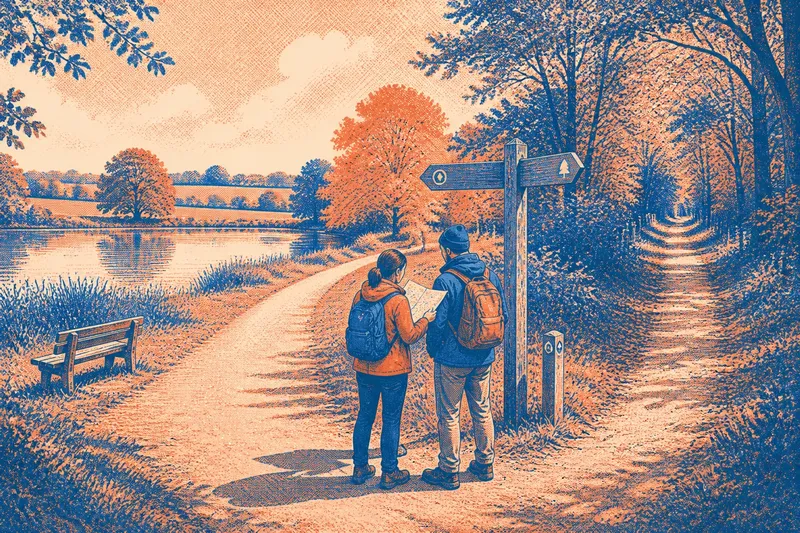
A Late-Autumn Outing with One Gentle Anchor
Plan a late-autumn outing around one gentle anchor, with a clear destination and practical ways to adapt the route if weather, access or energy changes.
A late-autumn outing is easier to plan when one clear destination shapes the day. Choose a sheltered viewpoint, a village pond or a woodland clearing, then decide how you will reach it and what would make you change course.
This is not a plan to wander until something catches your eye. It is a small, purposeful trip: a place to reach, a practical route and a return option. That structure helps when daylight is limited or paths are wet, without requiring a packed schedule.
Choose an anchor with a clear purpose
Give the anchor a specific reason to be there. A pond might offer reflections to sketch; a viewpoint might be a spot for a flask and a snack; a clearing could be where you watch birds from a respectful distance. A purpose makes the stop feel distinct from the walk to and from it.
Check that the place suits the people coming. Look at a map for paths, gates and possible access restrictions, and consider whether the route includes steep or muddy ground. If you are taking a dog, check local rules and whether livestock may be present. Use local access notices where available.
Pick a place that has a straightforward return route.
Make a simple route card before you leave
Write the plan in a few lines, on paper or in a phone note. Include the starting point, the anchor, the route back and one alternative. A paper map is useful where phone signal is uncertain; keep it somewhere accessible rather than buried in a bag.
- Starting point: note the car park, bus stop or trail entrance. If access is closed or transport is disrupted, use the alternative starting point you checked.
- Anchor: name the destination and the reason for going. If it is inaccessible, switch to the nearby place with the same purpose.
- Return route: identify a clear way back. If a path is flooded, muddy beyond your comfort or blocked, turn back or use the mapped alternative.
- Weather: check the forecast before setting out. If wind, rain or poor visibility makes the route unpleasant or uncertain, choose a sheltered option or postpone.
- Clothing and kit: check that footwear suits the ground and that you have warm layers and waterproofs. If anything essential is missing, shorten the plan or delay the outing.
- Time available: check when you need to be back and allow for the return. If the available time no longer fits the plan, choose the nearer anchor.
These checks are decisions, not boxes to tick for their own sake. If a route or condition feels uncertain, choose the simpler option.
Use the anchor to organise the outing
Give the destination a small task that fits the place. At a pond, you might look for reflections of bare branches. At a viewpoint, you could identify landmarks on a map. In a clearing, you might sit to draw the shapes of the trees. Keep the task quiet and leave wildlife undisturbed.
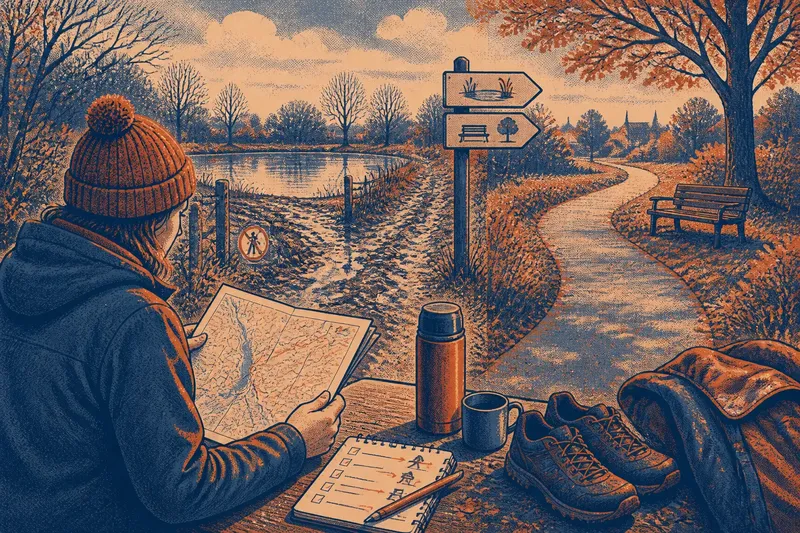
Imagine you are starting at a village car park with a map, a flask, waterproof shoes and an hour before you need to be home. The planned anchor is a pond reached by a muddy field path; the map also shows a firm route to a bench in the village park. At the car park, you check the route and find that recent rain has left the field path visibly waterlogged. You choose the park route instead, take the flask to the bench, and use the remaining time for a short walk on paved paths. The result is a completed outing with a clear destination, while avoiding the boggy route; the trade-off is missing the pond.
How should the plan change on the day?
What should I do if the path is muddy?
Check whether there is a firm, permitted alternative on your map. If not, turn back rather than stepping onto fragile ground or continuing into conditions that feel unsafe.
How do I choose between two possible anchors?
Compare access, shelter and the time available. Choose the nearer or more accessible place if the longer route would make the return rushed.
What should I carry for a late-autumn outing?
Choose footwear for the ground, warm layers and a waterproof outer layer. A map, water and a snack can also be useful; adjust what you carry to the route and local conditions.
When should I shorten or cancel the outing?
Shorten it if the route is taking longer than expected or someone is becoming uncomfortable. Postpone or choose a safer alternative if weather, visibility, access or ground conditions make the plan uncertain.
Choose among clear alternatives as conditions change
- If rain begins and the anchor is exposed, check whether a sheltered destination is accessible; if it is, switch to it, otherwise return by the simplest route.
- If the planned path is blocked, compare the obstruction with your mapped alternative; if that route is open and suitable, use it, otherwise turn back.
- If someone becomes tired, check how far the return remains; if continuing would make it difficult, shorten the outing and head back.
- If the anchor is occupied or closed, check for a nearby permitted place with the same purpose; if none is available, use the alternative destination or return.
- If daylight is fading sooner than expected, check the route back; if the planned loop would delay you, take the direct return route.
- If the group wants to stay longer, check the return route and any time commitment; if there is room, linger, otherwise begin the journey back.
For changing outdoor conditions, follow local guidance and use common sense. Do not continue simply to reach the original destination if the route has become unsuitable.
Make the return part of the plan
Before leaving the anchor, check the route back against the time and conditions. Put away any sketching or map-reading materials, pack out all rubbish and leave gates as you found them. If you used a phone for navigation, keep enough attention on the path to walk safely.
A late-autumn outing with one clear anchor works best when the destination has a purpose and the return remains simple. Keep the route card handy, and make the final decision about which way to go before conditions leave you with fewer choices.